Ortisei to Carezza Traverse: FAQs
Preparing for Your Adventure
We’ve compiled a list of the most commonly asked questions about this trip.
Hopefully you find some of these useful but if you have a specific question that isn’t covered in the FAQ’s, then please do not hesitate to get in touch.
WHAT IS THE ORTISEI TO CAREZZA TRAVERSE?
A four-day hut-to-hut journey through the heart of the western Dolomites in South Tyrol, Italy. Starting in Ortisei (St. Ulrich / Urtijëi), a traditional mountain village in Val Gardena, the route winds its way south towards Carezza (Karersee), finishing beside the beautiful turquoise waters of Lake Carezza, with the dramatic Latemar range reflected in its surface.
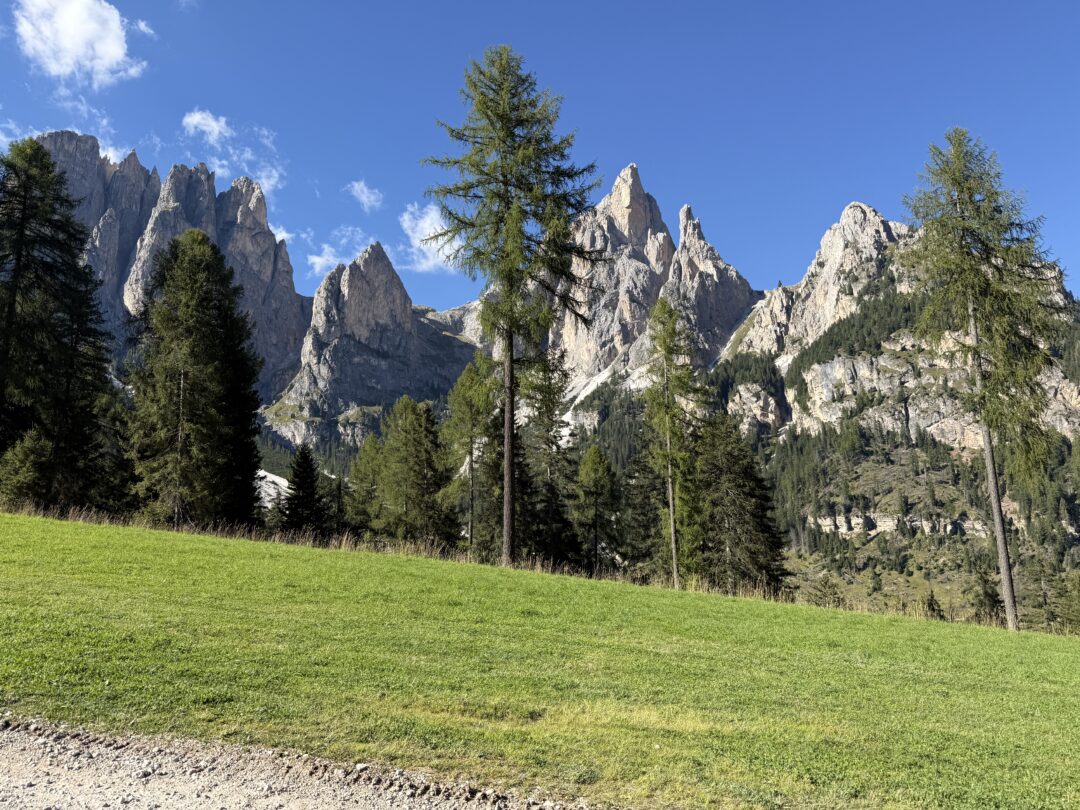
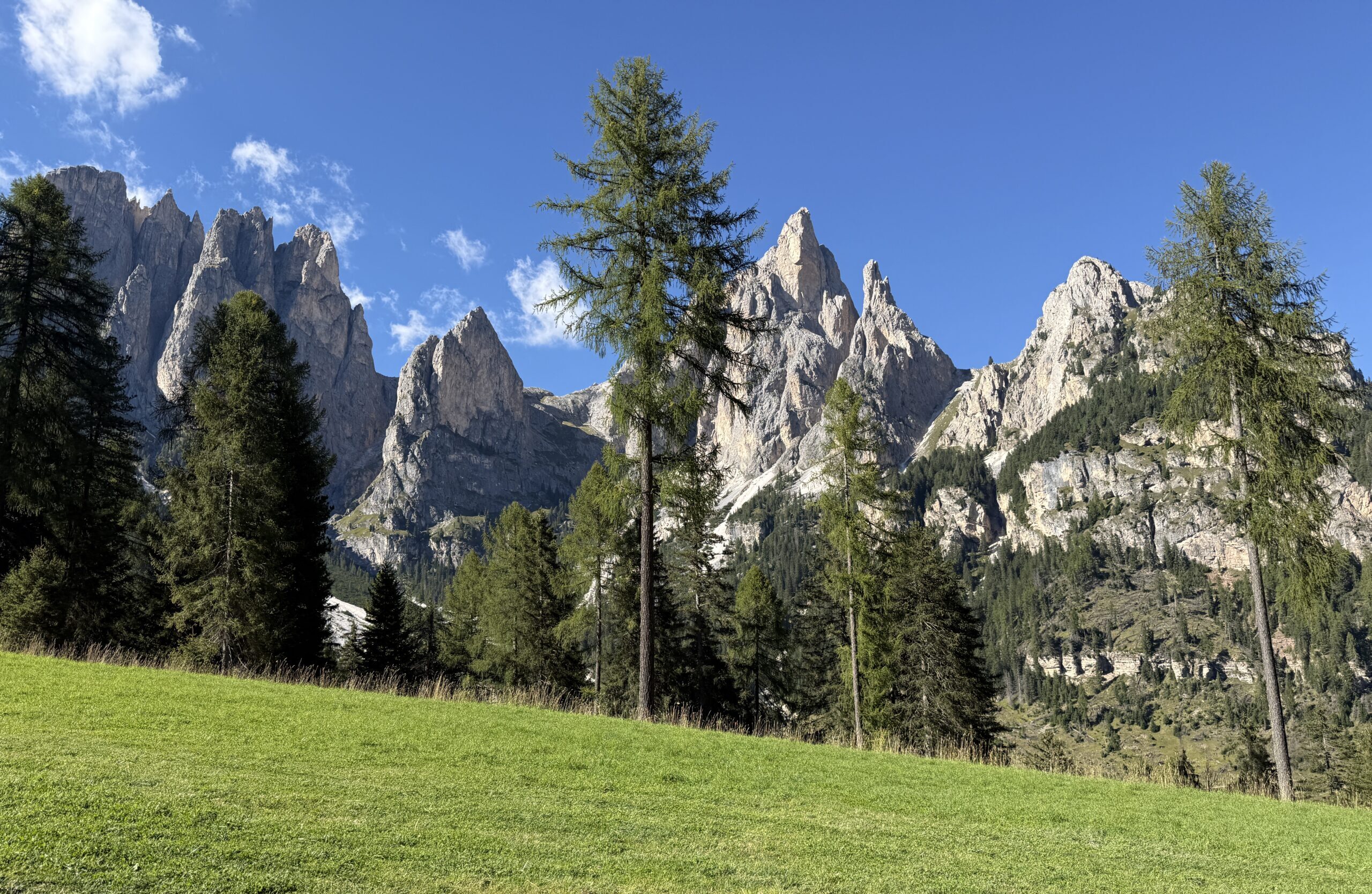
Along the way, you’ll cross the sweeping alpine pastures of the Alpe di Siusi (Seiser Alm) before entering the spectacular Rosengarten (Catinaccio) group, famous for its towering pale limestone walls and their remarkable pink glow at sunset. Over four days, the scenery is wonderfully varied, from open meadows and rolling grasslands to rugged mountain passes and dramatic limestone landscapes.
One thing you’ll quickly notice is the number of names for each place. South Tyrol is officially trilingual, so you’ll often see German, Italian and Ladin names used side by side on maps, signs and in villages.
HOW LONG IS THE ORTISEI TO CAREZZA TRAVERSE?
60kms / 3500m+ / 2500m-. This trek is rated easy to moderate, making it an ideal introduction to hut-to-hut hiking or a great option for those looking for a shorter mountain adventure. With lift access available on all stages, you can shorten your walking days if needed, offering extra flexibility along the way.
WHEN’S THE EARLIEST / LATEST YOU CAN TACKLE THIS TRIP?
Same as for most hut-to-hut routes in the Alps, they can be walked during the refuges’ opening season. In the Dolomites this goes from middle/end June to the end of September. Outside of this time it will be difficult to find accommodation. Some huts have a winter room that hikers can use but this is just an empty unmanned shelter with beds and sometimes a log burner. Outside of the huts’ opening season, as well, there could be snow on the ground making the trek more difficult and potentially dangerous if not equipped in the right way and with the right knowledge about the winter mountain environment.
WILL THERE BE SNOW ON THE TRAIL?
After a snowy winter, patches can linger on the higher passes and north-facing slopes into early July. If a pass is impassable, there are lower alternative routes, and we’ll let you know before you set off. Snowfall up high is possible even in midsummer: it rarely causes problems, but you’ll need warm layers and care.
HOW FIT DO I NEED TO BE?
While you don’t need to be an elite athlete, we strongly recommend doing some training to ensure you arrive in good physical shape for this type of trek. You can expect about 6 hours of walking each day, and roughly 700 meters of ascent daily. You don’t need previous trekking experience, but having some hill-walking experience will make the journey much easier. You should be comfortable walking for long periods on mixed ground with some ascents and descents, while carrying a backpack. Being prepared will ensure you have a fantastic time on the trek!
See here for trekking training tips.
HOW EXPOSED IS IT?This trek has relatively little exposure, particularly compared to the Alta Via 1. There are a few sections along the traverses that may feel slightly exposed, but the paths are well-trodden and straightforward.
DO THEY HAVE WIFI?Some of the huts have WiFi but some others don’t, especially those huts that are more remote. Even when WiFi is available, beware that it might not always work, or it might only be switched on for a limited amount of time. If you need to check information such as the weather or the bus timetables just ask the guardians, they’ll be able to help. As for the rest of the time, not having WiFi might be a good opportunity to have a chat with some fellow hikers!
DO THEY HAVE CHARGING POINTS?Yes, you will always be able to charge your phone and electronic devices. Sometimes there won’t be charging points in your room, but there will be some in the common room or in the toilets. There might not be many of these, so you will need to take turns at charging your electronics. Some hikers prefer to take a small external power bank with them to charge their stuff. This could be a good idea, but I won’t recommend to take one that’s too big and heavy. A small one that could charge your phone once or twice would be enough, even though is not strictly necessary.
DO THE REFUGES HAVE SHOWERS?Most refuges have showers, but not all of them. Some of the most basic and remote ones do not have shower facilities, or only have cold showers. Some of the showers, when available, work with a token that needs to be purchased directly from the hut. This gives you access to a limited amount of water (normally close to a 3 minutes shower), in order not to waste it. Water in the high mountains is scarse and a shower is very much a luxury. Most huts use waterthat has been collected over winter or that comes from a spring. If the previous winter has been particularly dry then the water reserves might be limited and run out in the middle of the summer, or a spring could go dry. If this happens, then, the hut guardians might be forced to stop the use of showers even in those huts that have shower facilities. In this case the limited water available will be used for the toilets and kitchen, which are definitely more needed services than showers.
WHAT’S THE FOOD LIKE IN THE HUTS?The food in the refuges is generally hearty and delicious, with a mix of traditional Italian and Tyrolean dishes. Expect pasta, polenta, soups, stews, cured meats, and cheeses. Many huts offer vegetarian options, but vegan and gluten-free meals may be harder to find, especially in smaller or more remote refuges. If you have dietary restrictions, please let us know at the time of booking so we can notify the huts.
DO I NEED CASH, OR DO HUTS TAKE CARD PAYMENTS?Most huts accept credit cards on this trek, but some still operate on a cash-only basis, particularly in more remote locations. It’s advisable to carry enough cash for meals, drinks, and any extras you may need along the way.
CAN I REFILL MY WATER ALONG THE WAY?Yes, but water sources vary along the route. Some huts have taps with potable water, while others may require you to buy bottled water. Natural streams and fountains can be found on the trail, but it’s always wise to carry a water filter or purification tablets to ensure safe drinking water.
CAN I DO THE ORTISEI TO CAREZZA TRAVERSE SOLO?Yes, the traverse can be done solo, and many hikers tackle it alone. The trails are well-marked, and refuges provide a social atmosphere where you can meet fellow hikers. However, solo hikersshould be extra cautious with navigation, weather conditions, and safety.
DO I NEED A SLEEPING BAG?No, you don’t need to bring a sleeping bag, but a lightweight sleeping bag liner is required. Refuges provide blankets and pillows, but for hygiene reasons, hikers must bring their own liner.
WHAT GEAR DO I NEED?The best advice: pack light! You’ll need less than you think. Trail shoes are suitable; heavy hiking boots aren’t necessary unless preferred. Lightweight, waterproof layers are essential, and trekking poles are highly recommended to help with steep ascents and descents. You’ll find our full kit list here. If you’d like further advice on how to choose the right backpack for your trek please see here.
HOW DO I GET TO AND FROM THE TREK?We’ve chosen Ortisei, a charming mountain town in the heart of the South Tyrolean Dolomites, as the starting point for this trek. It’s a lovely place to spend a night before setting off, with plenty to explore, including the spectacular Seceda ridge.
We recommend staying in either Ortisei, at the trailhead, or Bolzano, the nearest major transport hub (approximately 50–60 minutes by bus from Ortisei).
You can also start your trek in Castelrotto or Siusi if you prefer. Just let us know.
Tip: The shorter final day leaves plenty of time to travel onwards. Most travellers return to Bolzano for onward connections, or we can arrange a taxi transfer towards Cortina and the eastern Dolomites. We generally recommend travelling onwards rather than staying overnight in Carezza.
Getting there: Bolzano is the closest airport, although connections are limited. Milan, Munich and Venice offer a wider choice of international flights.
If you need help arranging pre- or post-trek accommodation, just let us know.
For more information, see our Getting to Your Adventure page.
INSURANCELet’s face it, these types of trips don’t come risk free. We’re putting ourselves in amazing environments but these also carry an element of risk with them. In order to protect yourself adequately you will need a specialist travel insurance that caters for the types of activities you will be undertaking. It is a condition of our agreement that you are covered by adequate travel insurance for your arrangements. See more information on insurance here.
DO I NEED TO PAY TOURIST TAX DURING THE TRIP?We do our best to cover all tourist taxes in advance when booking your accommodation. However, some places – especially more remote mountain refuges – require the tax to be paid on departure. If that’s the case it’s usually just a small amount (a few euros per night). We recommend carrying a bit of extra cash just in case.
ARE THERE ANY SAFETY PRECAUTIONS I SHOULD BE AWARE OF?Safety is paramount. Always check the weather forecast before starting your hike. Carry a map and a charged phone. Be cautious in alpine terrain, and adhere to trail markers and signs. We are on hand to advise every step of the way and will be in constant contact with you.
HOW TO CHECK INTO YOUR ACCOMMODATION?To check in, simply provide your name along with the name of the company, Adventure Base. All bookings are made on your behalf by Adventure Base. Please also take a moment to reconfirm your dietary requirements at check-in. Any drinks, snacks, or packed lunches are not included and must be paid for separately.
Top tips
- Pack light. You’ll need less than you think. Trail shoes are fine, and trekking poles really help! See Kit List here.
- Bring blister plasters. Even well-worn boots can rub after several days in a row.
- Carry cash. Enough for lunches and drinks, plus a hot chocolate or cold beer at the end of the day, not all refuges take card.
- Give way uphill. On narrow paths, step aside to let people coming uphill pass.
- Respect the livestock. Cows graze freely on the Alpe di Siusi. Give them space and close any gates behind you.
- Leave no trace. Take all your rubbish home, including orange peel, and stay on the path.
- Watch the sunset. Watch the Rosengarten turn pink in the evening light. The locals call it enrosadira.