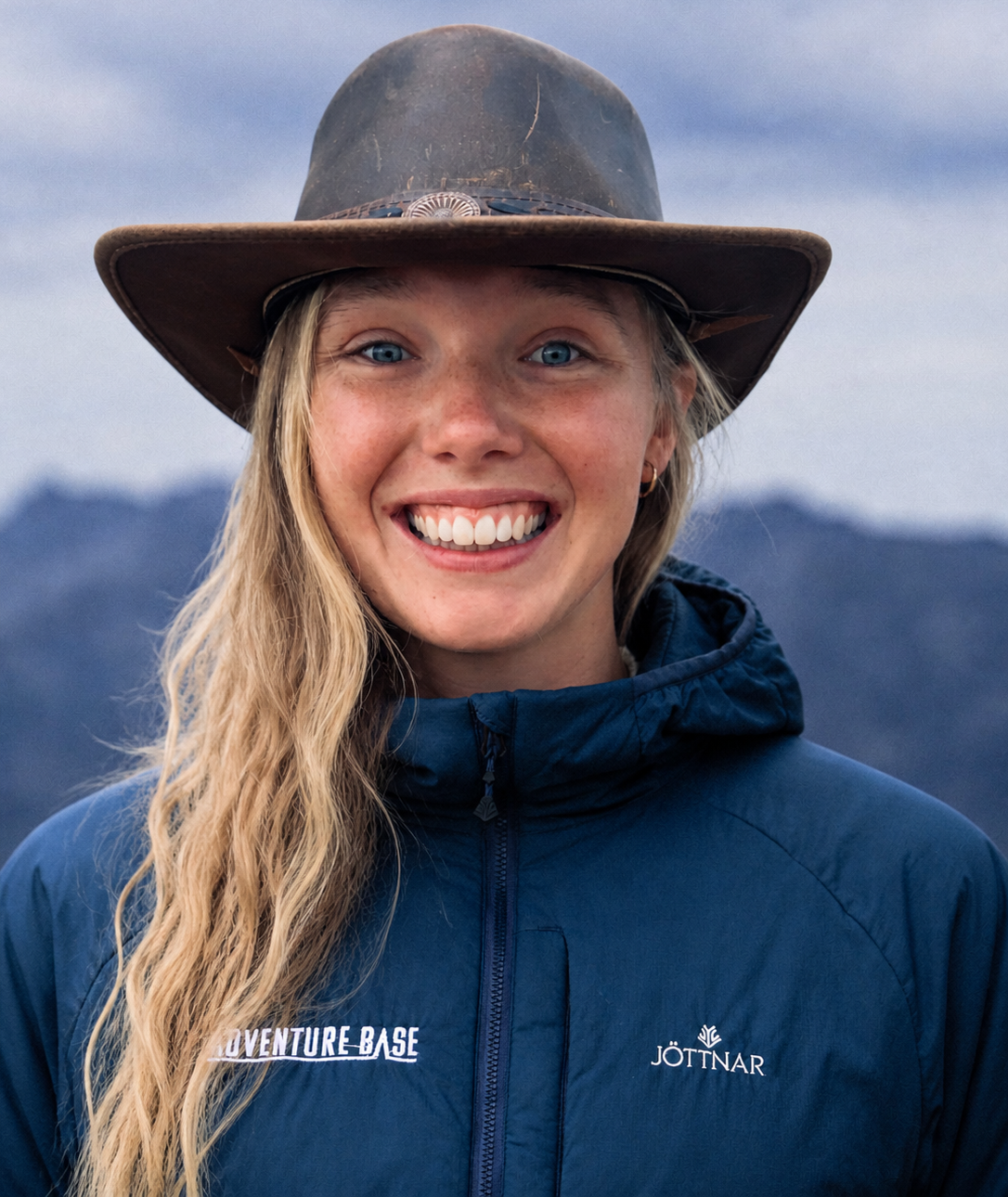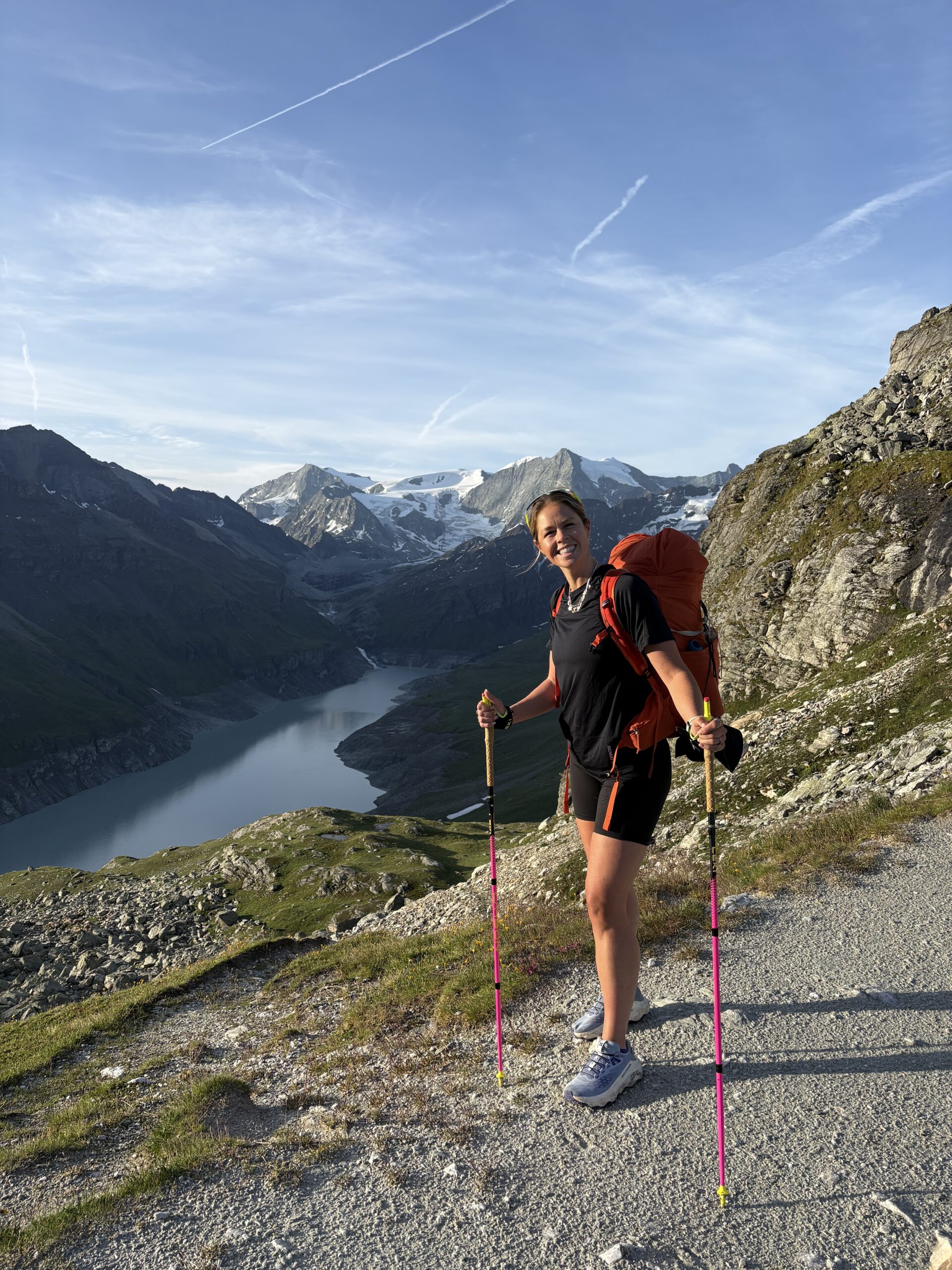
Recently Harriet, one of our Adventure Advisors, set off on the 10-day Haute Route in Switzerland, on a self-guided trekking adventure. We sat down with her afterwards to find out about her experience:
Have you ever done a multi-day hike before? Which ones?
I have done the Tour du Mont Blanc, and the Alta Via 1.
Compared to the AV1 and TMB, how demanding was The Haute Route?
Based on my personal experience, I would say the Haute Route is the most physically demanding.
All three treks are physically demanding – any trekking in the Alps is. But if I had to rank them, it would be The Haute Route as the most challenging, followed by Alta Via 1, and then the Tour du Mont Blanc.
On The Haute Route, you’re trekking at a much higher altitude than the others. The TMB and AV1 are sat at around 2000m, whereas The Haute Route is more like 3,000m elevation and the cols are much steeper, longer climbs.
The terrain on The Haute Route varies so much from day to day. Some days you’re trekking through meadows and fields. Some days you’re trekking on tiny little paths with big exposure. You’ve got lots of metal work and bridges all with quite steep exposure.
Who did you go with?
I had two friends that joined me. One friend joined me for the first three days and then another friend joined me for the remaining part of the trip.
How did you find walking everyday for 10 days? What surprised you?
Previously on my multi-day treks, I shortened them by doing bigger daily distances and less days. So, even though The Haute Route was technically and physically more demanding, it felt more spacious compared to the other trips I had done. I had time to really be present and enjoy it.
What was the food like?
The food was so good, exceptional actually. It’s varied because the mountain huts don’t have the same facilities as the hotels, and the supplies are delivered by helicopter. But I think what they do serve is incredible. They give big portions which is great when you’ve been trekking all day and you’ve burned a lot of energy, and you want a big portion of very tasty, high carb food. Or, in Hotel La Sage, I can honestly say it was one of the best meals I’ve ever eaten. It was like eating in a Michelin star restaurant. It was so beautifully presented – it even had edible flowers on it! There were a couple of places like that. One night I had a truffle fondue. One night we had duck breast and potato dauphinoise and the flavors were incredible. I couldn’t believe I was on a trek.
We ordered a pack lunch nearly every day and they were brilliant as well. They’re very substantial; with big sandwiches, either a chocolate or cereal bar, nuts and raisins, fruit and a drink.
How did you manage water along the way?
I didn’t have any trouble with water. I had the ability to carry 1.8 liters and I filled up from water troughs along the way. I would actually recommend also taking an extra squeezy water bottle, like a trail running bottle. Then on the days where you need extra water, you can drink that one first and then easily pack it away in your bag without taking up too much space.
What was your accommodation like? How were the huts?
The accommodation was my favourite thing about The Haute Route. There is such a variety of accommodations, from huts to hotels. I think the beauty of The Haute Route is the variety.
When it comes to refuges, the Swiss Huts are so well kept. They’re all high mountain huts, which come with incredible views, and the hosts at the refuges are very accommodating and very lovely.
I stayed in three huts. The first one, Cabane Mont Fort, had beautiful food, beautiful rooms and a big decking area. The second hut was very basic, with no showers and very little running water. But this was also a great experience as it meant I really appreciated the more luxurious accommodations that came later. The majority of the huts are at the beginning of the trip, and then later on into the trek it is more hotels and private rooms. Some of them even have saunas!
On the final night you stay in a spectacular hut called Europa Hut. It’s quite an iconic hut built by a Swedish family who still run the hut to this day. They’re often serving things like fondue or tartiflette and you feel like you’re in the middle of nowhere in this beautiful place, looking down the valley.
What was one thing that you packed that you were really glad you did?
I always use a compeed stick. It’s similar to compeed plasters but it’s a stick that you put on your foot in the morning, let it dry and it kind of gives your foot a layer of protection. I always use it and I’ve never had a blister on a trek, ever. I swear by it!
Also, take lots of socks. It makes such a difference having nice clean socks to put on in the evenings! You need to look after your feet.
I was also really glad for my Jöttnar rainjacket. Even though it only rained on one of the days, it was the perfect thing to put on in the mornings when there’s still a bit of a chill, but a fleece would be too hot. It’s very light to put away and obviously it’s very handy if it rains. So I would emphasise a good rain jacket, make sure it’s Gortex, make sure it’s windproof as well as rainproof.
Obviously you went with friends, but in terms of socialising in the huts, how was it with meeting other people?
I was trekking quite early in the season, but it didn’t stop us meeting people. The thing with The Haute Route is there’s very limited options of where you can stay. So the likelihood is when you meet people in that first refuge, they’re going to be on a very similar, if not the same, refuge as you. It’s quite easy to meet people on the trail, which we did. I’d say the first few days you start seeing people and say hello because you know you will probably see them again. And then by maybe the first, fourth or fifth night, you know, there were a few of us that were eating dinner together.
There were a lot of solo trekkers on the Haute route, so they’re looking for people to connect with and check in with and say hello to. The social aspect was a really great part of the trek actually.
What was your biggest lesson from this experience?
It’s very easy when you’re on a trek and doing physical activity to try and get it done as quickly as possible. Sometimes you rush through the trek, keep your head down and try to get to the top of the col as quickly as possible. But this time I made such an effort to look up, take it all in and remember the reason that you’re there is to enjoy being in the mountains. So for me this trek was about slowing down and giving myself space and time to take it in, rather than trying to rush through the day just to complete it.
As we know, life is busy, and so I felt very lucky to be able to step away from the usual day to day sitting behind a laptop.
Final thoughts or advice on The Haute Route?
It would be fitness. Part of being able to have the luxury of slowing down and taking in the scenery is having the fitness to do that. It’s about having the physical ability to be able to get to the top of the cols without wanting to collapse, and to get to the refuges in time for dinner. So my advice is to have a decent fitness level to be ready to really enjoy the trip.